Showing posts with label 2012. Show all posts

2012 Chevrolet Centennial Edition Corvette Z06

Engine 7 liter V8, Aspiration natural, HP 505 hp, HP/Liter 72.1 hp per liter.

2012 Chevrolet Centennial Edition Corvette Celebrates Racing Heritage
Z06 Centennial Edition to be auctioned at Barrett-Jackson Palm Beach sale
Chevrolet, founded by a racing pioneer 100 years ago, celebrates its performance heritage with the 2012 Chevrolet Centennial Edition Corvette, which features a sleek black color scheme, unique design elements and Corvette’s trademark sports car technology.

The 2012 Centennial Edition package will be available on all Corvette models – including Grand Sport, Z06 and ZR1 – starting this summer.

The special package was inspired by Chevrolet’s racing-bred foundation, which continues with Corvette’s international racing excellence and production sports car prominence.
“Racing and performance are the roots of Chevrolet, a tradition carried forward today by Corvette,” said Rick Scheidt, vice president of Chevrolet marketing. “The Centennial Edition not only celebrates our 100 years, it once again pushes Corvette forward for a new generation of sports car fans.”

Chevrolet will auction a Corvette Z06 Centennial Edition at the Barrett-Jackson collector car auction in West Palm Beach, Fla., on April 9, with the proceeds to benefit the Austin Hatcher Foundation for Pediatric Cancer. It will be the 100th 2012 Corvette off the assembly line, with a vehicle identification number ending in “00100.”
The Chevrolet Centennial Edition Corvette expresses racing heritage, but does so with a sleek, modern, even sinister-looking appearance. The Centennial Edition package comes exclusively in Carbon Flash Metallic, with satin-black graphics and unique Centennial Satin Black wheels and red brake calipers. The wheels are constructed of lightweight cast-spun aluminum and include a thin red outline around the perimeter of its surface on the Z06. The wheels are specific to the respective Corvette models, including 18-inch/19-inch for Coupe, Convertible and Grand Sport; and 19-inch/20-inch for Z06 and ZR1.

Magnetic Selective Ride Control, the world’s fastest-reacting suspension and a technology advance initiated by Corvette, is included on all Chevrolet Centennial Edition Corvette models.
The Centennial Edition also features special badges that signify Chevrolet’s racing history. A graphic logo featuring an iconic image of Louis Chevrolet appears on the B-pillars, the center caps of the wheels, and the center of the steering wheel. The seat headrests also carry an embossed centennial logo.

Aficionados will note one other small detail: The historic crossed flags badge contains a small adaptation, with “100” in place of the traditional fleur-de-lis symbol, only for the Centennial Edition.

The exterior color scheme is reinforced inside the car, with the Ebony leather-wrapped instrument panel and doors complimented by red stitching on the steering wheel, seats, console and shifter. Microfiber suede accents on Centennial Edition seats, steering wheel, shifter and armrests were first used on the 2011 Z06 Carbon Limited Edition.
The Chevrolet Centennial Edition will be available on all Corvette models via order code ZLC. Pricing will be released this summer prior to the start of availability.

“Louis Chevrolet was a fearless racing pioneer who also designed our first car,” Scheidt said. “Corvette is a natural fit to honor that legacy, while creating a compelling new package for sports car drivers.”

2012 Kicherer Mercedes-Benz C63 White Edition

Engine 6.3 liter V8, Aspiration natural, Torque 457 lb-ft, HP 520 hp, HP/Liter 82.5 hp per liter

Mercedes-Benz C63 Exclusive White Edition!
Special editions have been a tradition at Mercedes-Benz specialist KICHERER in Stockach, Germany for many years. Just in time for winter 2011-12, a new limited edition WHITE SERIES is available - limited to just ten vehicles and developed exclusively for the sporting driver, it places pure exhilaration and driving pleasure at the forefront of the driving experience, without foregoing the usual comforts.
Serving as the basis for the special edition is the C63 AMG, a real race machine that is a serious rival for the BMW M3 and others in class. When it comes to performance, KICHERER has treated this powerful saloon to a software optimisation, including the removal of the V-max limit, so that now around 520bhp and a maximum torque of around 457lb ft are tearing at the power train. To make sure all of this performance can be turned into propulsion without losing any of it, a high-performance limited slip differential with variable slip provides for optimal traction. Next to that there’s also high-performance coilovers which are individually adjustable for hardness and which push the limit up significantly. In the wheel-arches of the KICHERER C63 White Edition are a set of in-house 20-inch large RS 1 forged wheels, up front with 245 tyres and at back with 275 tyres. Behind the rims is hiding a high-performance braking system with steel braided hoses from Brembo.
In terms of aerodynamics, KICHERER has treated the front end of the C63 to a new apron with integrated flaps and LED daytime running lights as well as a carbon front grill with piano lacquer finish. A set of side skirts with built in supports in piano black gives the look of a lowering of the vehicle. The back offers, apart from a rear diffusor, also in piano lacquer finish, two giant exhaust tailpipes with a flap-controlled sports exhaust, made of stainless steel.
For the interior, the designers at KICHERER thought of something special for the WHITE EDITION. The seats in the front and in the back are fitted out with exclusive Napa leathers in black and white. In addition to that, the tuners covered the door panels and the upper and lower parts of the dash panel, the centre console and also the ergonomically-moulded sports steering wheel with leather. It’s worth taking a closer look at the perfect white stitching, which effuses elegance as it contrasts with the black leather.

With the WHITE EDITION KICHERER Fahrzeugtechnik has again created a limited special edition, which, even when it’s parked in the yard, simply bristles with exclusivity and race readiness.
All further details, as well as price and delivery information are available directly with:
KICHERER Fahrzeugtechnik GmbH & Co. KG
Im Eschle 6
78333 Stockach
Germany
Tel.: +49 (0) 77 71 / 93 70 0
Fax: +49 (0) 77 71 / 93 70 22
www.kicherer.net
E-Mail: info@kicherer.net

2012 Toyota NS4 Plug-In Hybrid Concept

Toyota Reveals NS4 Advanced Plug-In Hybrid Concept
'Vision of the Future' Concept Vehicle Features Advanced Powertrain, Human-Machine Interface and Safety Features

Toyota Motor Sales, U.S.A., Inc. (TMS), today revealed the NS4 advanced plug-in hybrid concept vehicle at the 2012 North American International Auto Show (NAIAS) in Detroit. The NS4 signifies Toyota’s vision for future mobility with a focus on connectivity and the human interface.

Toyota engineers were challenged to design a new mid-sized concept for potential global market introduction by 2015. The NS4 concept is a dedicated plug-in hybrid, separate from the Prius family, designed with future mobility requirements in mind.

“In this digital age, cars are becoming another spoke in the wheel of our electronic connectivity,” said Jim Lentz, TMS president and chief operating officer. “NS4 demonstrates Toyota’s take on the human connection to the car with technology that considers both emotional and rational relationships, person-to-car and car-to-society.”

NS4’s advanced powertrain targets a next-generation Hybrid Synergy Drive plug-in system featuring reductions in component size and weight with improved overall fuel economy, better acceleration and longer all-electric range, while maintaining a short charge time.
Sleek, Futuristic Styling
The NS4 concept signals a new styling direction for the Toyota brand aimed at creating an emotional connection with consumers. NS4 styling lines reflect a new take on the aerodynamics of the modified triangle, with a low height and cabin-forward tilt. The distinctive open trapezoid grille is accented by a floating lower spoiler and wing-like daytime running lights wrapping around to a sculpted fender. Rear lamps wrap around the sides of the vehicle to quarter sections layered into blistered fenders, while the rear lamp wings create a sharp edge and the effect of a rear spoiler.

The A-pillars are ultra thin for improved driver visibility while maintaining roof
crush integrity. The roof line profile, lift back design and powered swan-wing doors create greater accessibility and efficient functionality.
Increased Connectivity
Traditional vehicle development cycles average four years, but this is rapidly changing in the digital age. Vehicles have become another communication hub in the connected-consumers lifestyle and automakers must integrate the latest technologies into their product offerings. In fact, connected vehicles are the third-fastest growing technological device, behind smartphones and tablets.

Toyota has formed special alliances with technology leaders such as Microsoft, Intel and Salesforce to explore the creation of seamless vehicle interfaces with emerging technologies. These alliances will help ensure Toyota is at the forefront of this emerging sector of the automotive market.

The NS4 concept’s Human-Machine Interface (HMI) provides a user interface built around a multi-touch screen with the look and feel of a smartphone. The simple, intuitive operation conveys information quickly while minimizing distractions and maximizing driver awareness. The multimedia and vehicle-controls enhancement also will direct air conditioning, audio, battery-charge and navigation functions. The HMI system is even capable of “learning” driver preferences and habits to anticipate driver responses in specific environments and situations. This concept represents a truly connected vehicle, offering the latest technology in a responsible and convenient package.
State-of-the-Art Safety Features
The NS4 introduces a next generation Pre-Collision System (PCS) with lane departure, rear-end and pedestrian collision avoidance technologies designed to predict collisions under certain circumstances and help avoid them. This PCS uses millimeter-wave radar and stereo cameras mounted on the front of the vehicle to detect and react to lane departure, pedestrians and other vehicles. In addition, the system emits near-infrared beams to enhance PCS recognition at night. This driver assistance feature helps to avoid collisions with other vehicles, road-side obstructions, and pedestrians by applying the brakes and manipulating steering.

The current generation PCS, available in certain Lexus and Toyota vehicles, is designed to identify certain objects directly in the road ahead. If PCS determines that a collision is imminent, the brake assist system is placed in standby mode, a warning is displayed and a buzzer sounds. If PCS determines that a collision is unavoidable, the system still will alert the driver via a warning light, warning display and buzzer, apply the brakes and automatically retract the driver and front passenger seatbelts.
Adaptive Driving Beam (ADB) headlights help prevent vision-impairing glare to oncoming drivers and pedestrians. Using a camera mounted behind the front grille and partial shielding inside the headlights, this feature allows drivers to maintain near-high beam illumination to improve nighttime visibility.

The pop-up hood structure automatically raises the rear of the hood to increase the space underneath, helping to reduce pedestrian head injuries caused by a collision with the front of the vehicle, within certain speed ranges. This innovation is the result of testing and verification using both conventional crash-test dummies and Toyota’s Total Human Model for Safety (THUMS) virtual model.

Using sub-millimeter wave radar, the Blind Spot Monitor (BSM) is designed to detect a vehicle in the adjacent lane and visually alerts the driver using visual indicators placed in the upper dash.
Four new glass technologies are integrated into the windshield and front triangle, door, and rear windows to improve driver visibility, gas mileage and electric driving mode mileage efficiency:
• Hydrophobic coating – Fluorine coated glass causes rain drops to form into semispherical shapes for improved visibility and rain drop elimination (also used on the roof solar panel)
• Anti-fog film – High performance resin material with anti-fogging characteristics and increased durability
• High ultraviolet (UV) absorbing inner-layer – Removes 99 percent of harmful UVA and UVB rays
• Anti-solar film with radio-wave transparency – Reduces the internal vehicle temperature and improves electronic device functionality

Inner and outer rear view mirrors have been replaced with cameras that provide the driver with a panoramic rearward view. The rearward image is displayed on a dedicated dashboard mounted screen above the navigation screen and provides a wider view than conventional rear view mirrors. The rearward panoramic camera view working in combination with the Blind Spot Monitoring (BSM) system enhances driving visibility.

“The continued success of our conventional hybrid vehicles has laid strong groundwork for market acceptance of future advanced technologies,” said Lentz. “NS4 demonstrates Toyota’s ongoing commitment to enhancing the safety, efficiency, and convenience of future mobility for people everywhere."

2012 Audi A6 Allroad Quattro


The new Audi A6 allroad – the Avant for any kind of road

• Successful model completes the A6 model series
• Advanced powertrain technology with turbocharging and direct fuel injection
• Fuel consumption reduced by as much as 20 percent

The first two generations of the allroad quattro from the years 2000 and 2006 were winners, and Audi hopes to build on this success with the third generation. Universally talented, the new A6 allroad quattro extends the range of uses for the A6 Avant because when the asphalt ends, it just keeps on driving. Performance has improved and fuel consumption has been reduced by as much as 20 percent compared with the previous model.
Body and exterior design

The new A6 allroad quattro is 4.94 meters (16.21 ft) long, 1.90 meters (6.23 ft) wide and 1.47 (4.82 ft) meters tall, making it a few millimeters bigger than the Avant. It follows the Audi ultra lightweight construction principle familiar from the sedan, with aluminum components making up roughly 20 percent of its body. Total vehicle weight has been reduced by as much as 70 kilograms (154 lb) compared with the previous model.

The Audi A6 allroad quattro has a sportily distinctive road stance. It features balanced proportions, sharp lines delineate taut surfaces and the roof line flows into flat D-pillars. Audi offers progressive LED technology as an option for the headlights and tail lights. The xenon plus headlights can be combined with adaptive light, which ensures that the road is always properly illuminated for the situation at hand.

The body of the new A6 allroad quattro sits six centimeters (2.36 in) higher than that of the A6 Avant. Setting it apart are, in particular, the trim strips on the side sills, the more widely flared fenders and the single-frame grille with vertical slats. Stainless steel covers protect the underbody at the front and rear of the car, and the exhaust system ends in two large, flattened tailpipes. The roof rails are mounted on double bars.

The wheel well edges, the bumpers and the sills are painted in a contrasting color. Audi also offers a full paint finish in combination with the optional aluminum exterior package. The color Java Braun is available exclusively for the new A6 allroad quattro.

Interior and luggage compartment

The interior of the Audi A6 allroad quattro offers plenty of space thanks to the long wheelbase of 2.91 meters (9.55 ft). It features a lean, elegant design, exemplarily clear ergonomics and superior workmanship. A function that depicts the car’s pitch has been added to the MMI operating system, the soft keys of which are gleaming aluminum. MMI comes as standard, as does the onboard computer with efficiency program. A comprehensive package of restraint systems helps to mitigate the consequences of an accident.

Visual cues differentiating the A6 allroad quattro include the carpeting and the instrument panel, which are black throughout. Other refined details include the interior color Santos Brown and the optional aluminum inlays. The door sill trims are also made of aluminum and are emblazoned with “allroad.”

2012 JE Design Audi Q7 S-Line Widebody

.
More sport for the Audi Q7 S-Line: JE DESIGN Widebody "ennobles" the sports SUV

• Aggressive body kit for the Audi Q7 S-Line
• 22-inch SUV Select and SCORPIO alloy wheels
• Performance enhancements and sports lowering available
• All components supplied with TÜV certificates

More sport, more individuality, and more overtaking prestige: Car-tuning manufacturer JE DESIGN is offering all Audi Q7 S-Line models of the Facelift generation a significant boost in exclusivity with a multipart bodywork kit and 22-inch alloy wheels.

The JE DESIGN bodywork kit, which includes door trims, merges harmoniously with the Audi Q7's contours and enhances the SUV's design. During assembly, the high-class wheel arches are glued to the bodywork, widening the vehicle by 30 millimeters per side at the front and 40 millimeters per side at the rear. Especially the fender extensions on the rear axle, with their vent holes, lend the Audi Q7 S-Line a very sporty look. Also included are front-spoiler corners, a PDC-suitable (Park Distance Control) rear-apron extension, and two JE DESIGN double-tailpipe covers, all of which are fashioned from highly polished stainless steel in an attractive diamond-shape design. A dynamic roof wing with side covers above the C pillars adds further emphasis to the sporty charisma of the JE DESIGN "Widebody". The complete styling package, including tailpipe covers, is available directly from the tuning manufacturer from 7,438 euros.

22 inches of exclusivity

For an even more exclusive look than with the standard Audi S-Line on international boulevards and streets such as "Fifth Avenue" in New York, "Kensington Palace Gardens" in London, "Avenue Montaigne" in Paris, "Avenue Princess Grace" in Monaco, "Via Suvretta" in St. Moritz, "Maximilian-Straße" in Munich, "Ostozhenka" in Moscow, or "Severn Road" in Hong Kong, the wheel arches beneath the broad fenders are filled out by single-part 10 x 22 inch SUV Select alloy wheel rims. The timeless five-spoke design wheels are available in three different color schemes (matte-black, front silver matte / shadow silver, front polished / graphite matte, polished lip) and are fitted 295/30R22 tires.

2012 Nissan GTR

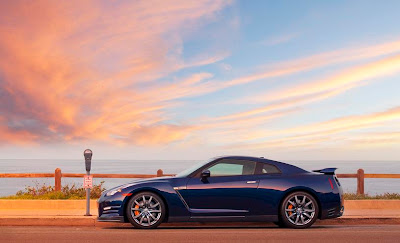
Specifications: Price $89,950, Engine 3.8 liter V6, Aspiration twin turbocharged, Torque 488 lb-ft, HP 530 hp, HP/Liter 139.5 hp per liter.

2012 Nissan GT-R Features More Horsepower, New “Black Edition,” Revised Fascias and Carbon Fiber Interior Trim
Nissan’s Multi-Dimensional 530-Horsepower Supercar Makes North American Debut at Los Angeles Auto Show, Set to Go On Sale in Early 2011

Entering its fourth year of availability in the North American market, the 2012 Nissan GT-R has a new look, new colors, new wheel design and, most important to fans of pure power, more horsepower under the hood. In addition, a new “Black Edition”– with unique seats, interior colors and wheels – joins the GT-R Premium model. The latest iteration of Nissan’s legendary supercar makes its North American debut that the 2010 Los Angeles Auto Show and will be available at official “GT-R certified” Nissan dealers across the United States in early 2011.
The 2012 Nissan GT-R’s advanced VR38DETT 3.8-liter twin turbo V6 now produces 530 horsepower (versus the previous 485 horsepower) and 488 lb-ft of torque (versus the previous 434 lb-ft) – a result of modifying the boost pressure of the turbocharger, valve timing and air mixture ratio, and through reducing intake air resistance by enlarging the inlet pipe diameter. In addition, exhaust air resistance was reduced through use of an enlarged section of exhaust pipe.

GT-R’s already impressive aerodynamics have been improved for 2012 with downforce increased by about 10% and the coefficient of drag reduced to 0.26 (from 0.27). Stability is improved by enlarged fascia and grille openings, which also help reduce air resistance inside the engine compartment. The volume of air that passes through the radiator and cools the front brakes is also increased.

The newly refreshed front fascia features aggressive double rectifier fins and new integrated high intensity LED running lights. Additional plated parts are used for the headlight inner panels, enhancing the car’s strong visual presence.

2012 Scion FR-S Race Car

HP 600 hp
Scion Racing Debuts FR-S Race Car
• FR-S race car will compete in 2012 Formula DRIFT series
• 'First 86' program offers chance to be among the first to own the FR-S
• FR-S will offer brand new connected audio system called BeSpoke

Detroit – January 9, 2012 – Scion today unveiled its Scion Racing/GReddy FR-S race car during a press conference at the 2012 North American International Auto Show. The FR-S will be competing in the 2012 Formula DRIFT series with veteran driver Ken Gushi behind the wheel.
The 600-horsepower FR-S race car is the result of a collaboration between Scion Racing and GReddy, a performance-products company that has been involved with Toyota and racing for over twenty years.

The race car is inspired by the 2013 Scion FR-S, a compact rear-wheel-drive sports car that will go on sale in the spring of 2012. The high-performance coupe is the fifth model to join the Scion family.

2012 Lexus LF-LC Hybrid Sport Coupe Concept

 
Lexus Unveils Sleek Hybrid 2+2 Sport Coupe Design Concept at North American International Auto Show

Lexus today unveiled a new design concept for a hybrid 2+2 sport coupe at the North American International Auto Show. Showcasing the future design direction for Lexus with an emphasis on a driver-focused vehicle, the LF-LC concept will be at the Lexus display through January 22.

“The concept we’re showing here in Detroit continues the Lexus design revolution started with the CT and GS,” said Mark Templin, Lexus group vice president and general manager. “The concept hybrid 2+2 liberates the idea of a sport coupe and pushes the boundaries of performance, style and technology.”

Challenged by the Lexus Center in Japan to come up with a design for a future hybrid sport coupe concept, the company’s Calty design studio in Newport Beach, Calif., sought to advance the redefinition of Lexus with emotive, avant-garde beauty and advanced technology, yet remain within reach for premium buyers.

“Our entire studio worked to develop this beautiful interpretation of Lexus originality,” said Kevin Hunter, president of Calty. “The LF-LC concept embodies our vision of what a premium sport coupe could be.”

The LF-LC displays the new Lexus design language in its bold interpretation of the signature Lexus spindle grille and rear architecture. Sumptuous curves blend smoothly into dynamic angles, creating an inviting display of lines, shadows and corners.

Framed by a deep aluminum surround, the mesh pattern of the spindle grille takes 3D sculpture form, and functional air intakes in the bottom corners of the grille show the fusion of distinctive style and engineering functionality.

Daytime running lights are shaped like an “L” while the vertical fog lamps utilize a fading dot matrix pattern to suggest a sense of movement.

The profile of the LF-LC creates a powerful, dynamic silhouette that is unmistakably that of a serious driver’s car. The lines of the vehicle emphasize direction and motion.

2012 Audi A1 Quattro

Production 333, Engine 2 liter inline-4, Aspiration turbocharged, Torque 258 lb-ft @ 2500-4500 rpm, HP 256 hp @ 6000 rpm, HP/Liter 128 hp per liter, 0-62 mph 5.7 seconds, Top Speed 152 mph.

The new head of the compact class: The Audi A1 quattro
Limited-production (333 units) A1 quattro beginning 2012 188 kW (256 hp), quattro drive, 0 – 100 km/h in 5.7 seconds Dynamic look inside and out, thoroughly equipped
Audi is crowning its successful A1 model series with an exclusive top-of-the-line model. The dynamic A1 quattro, limited to just 333 units, moves to the head of the compact class. Its two-liter, turbocharged engine produces 188 kW (256 hp) and 350 Nm (258.15 lb-ft) of torque, which is delivered to all four wheels. The Audi A1 quattro sprints from zero to 100 km/h (62.14 mph) in 5.7 seconds and has a top speed of 245 km/h (152.24 mph).
The A1 quattro is powered by the 2.0 TFSI engine. The 1,984 cc, four-cylinder engine combines gasoline direct injection with turbocharging in the classic Audi manner. Among its highlights are the adjustable intake cam shaft and the two balance shafts, which ensure smooth operation. Maximum torque of 350 Nm (258.15 lb-ft) is continuously available between 2,500 and 4,500 rpm, and peak power (188 kW/256 hp) is developed at 6,000 rpm.
Every detail of the sporty, sonorous four-cylinder engine has been optimized for high performance and low fuel consumption. Common rail injection, a turbocharger with intercooler and a regulated oil pump are just a few examples. The Audi A1 quattro is expected to consume on average 8.6 liters of fuel per 100 km (27.67 US mpg). Yet it performs like a top-notch sports car: The standard sprint takes just 5.7 seconds, and top speed is 245 km/h (152.24 mph).

The 2.0 TFSI delivers its power to the quattro permanent all-wheel drive system via a precisely shifting six-speed transmission, bringing Vorsprung durch Technik to the small-car class. The heart of this system is an electronically controlled, hydraulically actuated multi-plate clutch whose package of plates rotates in an oil bath.

During normal driving, the clutch sends most of the engine’s power to the front wheels. If traction decreases there, the clutch can transfer torque steplessly to the rear axle in just a few milliseconds by forcing the packages of plates together by a defined amount. A pressure reservoir helps the electric pump to develop the oil pressure. If a wheel on one of the axles should slip, it is braked by the electronic differential lock (EDL).
The placement of the multi-plate clutch at the rear axle provides for a harmonious distribution of the axle loads, and the chassis of the Audi A1 quattro has been adapted to the dynamics of the drivetrain. It is much more tautly tuned than that of the production model. The front suspension is a McPherson construction; a four-link axle is used at the rear. The sensitive and efficient electrohydraulic power steering has a sporty, direct 14.8:1 steering ratio.

The Audi A1 quattro rolls on 8.0 J x 18 cast alloy wheels. They are Glacier White, feature an exclusive turbine design and are fitted with 225/35-series tires. The internally vented front brake discs measure 312 millimeters (12.28 in) in diameter and are gripped by black calipers. The ESP stabilization program includes a sport mode and can be switched off entirely for a trip to the race track, for example.
One look is all it takes to see that the Audi A1 quattro is a very special vehicle. It is available only in Glacier White metallic, and its roof is painted high-gloss black. The front bumper is muscular, the frame and grate of the single-frame grille are high-gloss black. The curved bars in the headlights – the wings – are red. The grille, the roof arch and the rear hatch sport quattro badges.

The rear windows are tinted; the roof flows into a large, two-color wing. The color black accentuates the rear hatch and the diffuser. The LED rear lights are tinted; the rear bumper sports a distinctive look. The exhaust system terminates in two polished dual tailpipes on the left and the right, each measuring 100 millimeters (3.94 in) in diameter. The A1 quattro is 3,987 millimeters (13.08 ft) long, 1,740 millimeters (5.71 ft) wide and 1,416 millimeters (4.65 ft) tall, making it somewhat longer than the model on which it is based. Luggage capacity is 210 liters (7.42 cu ft); folding down the rear seats increases this to 860 liters (30.37 cu ft).
Cool, sporty black dominates the interior of the Audi A1 quattro. The seats and the armrests on the doors are covered in Silk Nappa leather with contrasting red seams. The S sport seats up front have pronounced bolsters, integrated head restraints and a quattro badge on the backrest covers. The seats feature multi-way adjustment. The lower section of the center console shines in high-gloss black; the footrest and the pedal caps are made of brushed stainless steel. Red seams frame the floor mats, and the door sill trims bear A1 quattro badges.

The instrument cluster has a number of eye-catching features, including white needles, a red tachometer, the quattro logo and the color display for the driver information system. The multifunction sport steering wheel is flattened at the bottom, wrapped in leather with contrasting red stitching and sports the car’s serial number. The shift lever knob is made of aluminum. Many control elements have an aluminum-look finish.
The Audi A1 quattro will be available from the second half of 2012 and will be supplied to customers with a full range of equipment. It includes many features taken directly from the luxury class, including xenon plus headlights, high-beam assistant, adaptive brake lights, LED interior lighting package, light and rain sensor, automatically dimming interior mirror, rear parking system, automatic air conditioning, alarm system, storage package, convenience key and cruise control.

The infotainment equipment likewise leaves nothing to be desired. It includes a CD changer, a digital radio tuner, the Audi music interface and MMI navigation plus. The Bose sound system drives 14 speakers with 465 watts of power; the woofers in the doors are indirectly lit with light guide LEDs. Audi connect uses the Bluetooth online car phone to connect to the Internet and deliver special web services, including Google Earth, to the car. Passengers can also connect their mobile devices to the integrated WLAN hotspot.

2012 Maserati GranCabrio Fendi

Engine 4.7 liter V8, Weight 4365 lbs, Aspiration natural, Torque 361 lb-ft, HP 433 hp, HP/Weight 10.1 hp per liter, HP/Liter 92.1 hp per liter, Top Speed 176 mph.

Modena-Rome 23 August 2011. The Maserati GranCabrio Fendi designed by Silvia Venturini Fendi is born from the union of two iconic brands of the Made in Italy, which share common values such as craftsmanship and tradition.
The exclusive Maserati GranCabrio Fendi debuts at Frankfurt Auto Show
The Maserati GranCabrio Fendi designed by Silvia Venturini Fendi is born from the union of two iconic brands of the Made in Italy, which share common values such as craftsmanship and tradition.
A masterpiece of technology and craftsmanship, the Maserati GranCabrio Fendi will be introduced at the Frankfurt Motor Show in September 2011.

The Maserati GranCabrio Fendi is crafted in the historical Maserati headquarters in Modena, with exclusive materials bespokely created in various colours for this project.
The three-layered body colour named Grigio Fiamma Fendi is a special dark grey with an iridescent golden finish on the surface. The wood trim Pergamena Fendi runs across the width of the dashboard, on the doors and on the top of the gear lever, all in the iconic FENDI yellow, like the brake callipers and the embroidered yellow trident on the headrests.
Adding a stronger yet elegant character to the GranCabrio is FENDI’s unmistakable double F logo, stitched on the seat, also appearing in the centre of the 20-inch alloy wheels, and the FENDI logo along the rocker panel.
Cuoio Romano, Fendi’s precious leather of its Selleria line, has been used for such details as the instrument cluster cover, for the gear lever and for the profile of the floor mats. It also features in the Limited Edition Travel Set of luggage and accessories.

The Maserati GranCabrio Fendi represents a perfect marriage between the art of Fatto a Mano (handmade) with the ultimate technology and research of its 4.7-litre V8 engine coupled with automatic transmission, which brings out to life a unique roar, music to the ears of car connoisseurs.
Silvia Venturini Fendi’s specially crafted logo seals this collaboration. A silver oval plaque with the engraving of the Maserati Trident, Fendi logo and the 5-digit series number (five being an iconic number for Fendi) is located on the dashboard, in front of the passenger seat, and on both sides of the black cloth folding roof.
A special black car cover with ton-sur-ton double F logo dresses the Maserati GranCabrio Fendi.

2012 Porsche Panamera GTS

More power and upgraded brakes, a body lowered by ten millimetres and the especially sportily tuned chassis with air suspension and PASM are the major technical modifications that make it the Porsche Panamera GTS capable of cutting it on the racing circuit. In terms of looks, the new Panamera GTS signals its independence by distinctive design features in the front-end, side and rear area as well as black highlights. The interior as well is rigorously tailored to the sporty personality with sports seats, SportDesign steering wheel with shift paddles, exclusive GTS leather interior and Alcantara surfaces.
The power unit in the new Panamera GTS is a modified 4.8-litre naturally aspirated V8 engine, delivering 430 hp (316 kW) at 6,700 rpm, trumping the engine in its Panamera S/4S sister models by 30 hp (22 kW). The maximum torque also increased by comparison, from 500 Nm to 520 Nm. The way in which at the push of a button the Porsche Doppelkupplungsgetriebe (PDK) transmits the engine output to the all-wheel drive (PTM) – thanks to the Sport Chrono package featured as standard without interruption to the power flow – is especially dynamic.
This collaboration enables the Panamera GTS to sprint to 100 km/h in under 4.5 seconds, accelerating on to its top speed of 288 km/h. With NEDC fuel consumption of 10.9 l/100 km – only 10.7 l/100 km with low-friction tyres – the Panamera GTS remains as much of an efficiency role model in its milieu as all Porsche models.
The Panamera GTS is being launched in February 2012 with a price tag of 116.716 €.

Related Posts Plugin for WordPress, Blogger...
copyright by AutoMotorPlex. Powered by Blogger.