"Scrappage scheme" nonsense strikes again

In the style of scaremongering papers like the Daily Fail, weekly car magazine Auto Express has revealed the latest "blow" to the scrappage scheme. According to the magazine, they have discovered that...
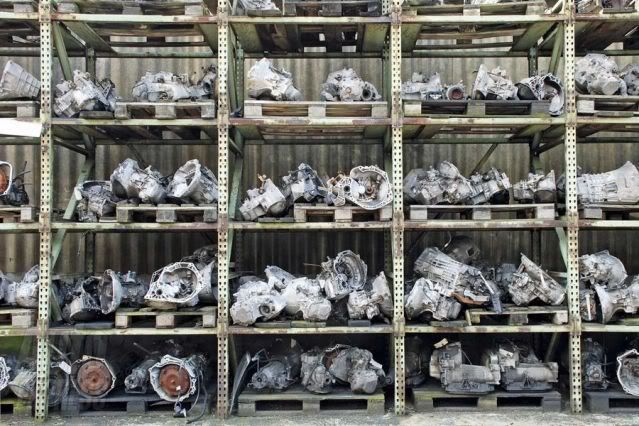
"Vehicle recylers have been selling powerplants from models ditched under the Scrappage Scheme via salvage outlets - effectively putting the polluting units back on the road"
Unfortunately, the writer has somehow managed to miss the blindingly obvious point that engines with no car around them aren't going to do much damage to the evironment at all. In fact, a salvaged engine will do no more damage to the environment sitting on a shelf than a salvage gearknob will. Even if or when the unit is eventually fitted into a car, it will likely be replacing a unit that was in an even poorer state of health and that unit will then be scrapped. Net increase of engines actually on the road: Naught.

Friends of the Earth have also inevitably stuck their nose into another matter they don't understand:
"The initiative should encourage drivers to replace older models with cleaner cars. This is keeping polluting vehicles on the road" (FotE's Richard Dyer)
Even aside from the fact that these salvaged engines will likely be used to replace engines in worse condition, Mr Dyer clearly believes that the production of a whole new car, rather than gaining further use from an existing one, is better for the environment too, and he also appears to be making the mistake of assuming that it's easier to afford a whole new car than it is to replace a few defective engine parts.
Tarmac admittedly isn't a great fan of the scrappage scheme, though we will admit that there are benefits in terms of keeping the industry afloat and keeping people's jobs, but it's clear that a well rounded view on the scheme is clearly beyond the reach of magazines looking for a quick controversy.

(Image: Auto Express)

Cadillac CTS Coupe First Drive 2011

Our equation for calculating the desirability of a two-door coupe based on a sedan platform is pretty simple: Does the two-door version offer enough additional visual appeal to offset the loss in practicality that is the inevitable result of the loss of two doors, rear-seat space and trunk capacity? This is the basic question we sought to answer in our first opportunity to drive the 2011 Cadillac CTS Coupe.


But first, let us give you a couple examples of how this math works, one on each end of the practicality-versus-beauty scale.

Despite using many of the same building blocks, there's a world of difference between the desirability of an Audi A4 sedan and an Audi A5 coupe. Safe to say that in the minds and eyes of those around our office, the A5's beauty more than offsets its loss of capacity.

Once upon a time, when two-door versions of sedans were more commonplace, there were both four-door and two-door versions of the Dodge Aries K-car. Now, the decision between those two might be just as easy as between the Audis, but the result would be different.

You Look...Fabulous!
Unless you happen to be viewing the coupe from the front, there's no mistaking it for the sedan with which it shares almost all of its mechanical systems. Sure, it shares a certain Cadillac-style angularity, but the coupe is a shocking thing to behold on the road. In the grand scheme of things, the greater the differentiation between the sedan and the coupe, the better. And to the eyes of most on our staff, the coupe is unusually handsome.

It does not follow the basic silhouette of the classic coupe — that smooth-and-sexy style executed so nicely on the A5 and the BMW 3 Series coupes. It looks, well, it must be said, like a hatchback of sorts. The angle of the backlight and trunk lid is so similar that from several paces away, it's not obvious that the CTS Coupe even has a trunk in the conventional sense.

The arrangement means that the rear flanks of the coupe cover an unusual amount of square footage. Some love it; some dislike it intensely, but everyone can agree that it's going to look its best when wearing very, very large wheels. Our pre-production test car wore the optional 19-inch wheels that come with the Summer Tire package. We wouldn't go any smaller. The base-level car wears 18s.

And for a brand that's still climbing out of the doldrums of its recent history, polarizing, unconventional styling isn't a bad thing. Then again, unconventional styling can be much less, um, attractive. We're looking directly at you, BMW 6 Series coupe.

We're buying wholeheartedly the shapes of the CTS Coupe's rear, yes, even the showy, chrome-rimmed exhaust outlets in the rear bumper cover. And we flat love the vertical taillights with their sharp peaks and the thorny-looking center brake light/spoiler. To offset all these vertical emphasis, Cadillac gave the coupe a wider rear track than the sedan (by about an inch).

Another uncommonly attractive detail is the inset touchpads that replace the sedan's conventional door handles. They allow for an uninterrupted flow along the car's flank, and their angular shape nicely suits this origami car.

For us, then, the CTS Coupe scores high on the design side of the coupe-vs.-sedan equation. And because it's American (built in Lansing, Michigan, it is), you can refer to it as a "coop," and not the pretentious European "coo-pay."

Related Posts Plugin for WordPress, Blogger...
copyright by AutoMotorPlex. Powered by Blogger.