I don't often feel compelled to write in to motoring magazines. Actually, I tell a lie. I often feel compelled, but rarely follow through with the desire.
However, Auto Express columnist Mike Rutherford (who also writes for The Times and The Telegraph) has finally irritated me enough to put digit to keyboard in his column for the 17-23 June issue of Auto Express. I shan't replicate his column in full - Mr Rutherdford aside the magazine is still one of the better motoring titles out there and this issue has an interesting comparison test between old and new Mazda MX-5s. But I digress.
Mr Rutherford writes: "If we're to believe those in authority and their ecomental pals, global warming is the greatest threat to mankind. The allegation is that the phenomenon will kill untold millions of people and places. What's more, some mentalist 'experts' deviously give the impression that CO2 emissions from 'murderous' motor cars are largely or entirely to blame for scorching the earth and allowing the planet and its inhabitants to crash and burn.
"I hear what they're saying, and I acknowledge their right to express their own opinions and predictions. But can we have less of the crystal ball gazing and scaremongering, and more of the hard facts, please? Where is the unbiased, incontrovertible, compelling evidence which proves beyond doubt that global warming will, on its own, destroy earth and mankind?"
He goes on to say: "When was the last time you actually heard any of the leading political parties even mention the T word [transport], let alone say what, if elected, they intend to do with the roads, rails, waterways and sky routes?"
The rest of his column devolved into a rather dull bash at politicians who've done far worse things than to not mention transport policy in their manifestos. Anyway, after adding weeks, months and years worth of straw with Mr Rutherford's smug columns, the camel's back finally succummed:
"Perhaps if Mike Rutherford is to get the unbiased evidence of man-made global warming he desires, he should first avoid biasing his column too far in the other direction. Labelling those who consider motor vehicles to be a large component of global warming "mentalists" is ignorant and arrogant. Regardless of whether Mr Rutherford likes their findings or not, these are still the findings of scientists which still hold more weight than the smug rantings of a mouthy motoring journalist. Indeed, Mr Rutherford is not even being forced to believe these findings and there are many, many other theories out there which he conveniently ignores in order to propogate an opinion that has already been done to death in the motoring media.
"Oh, and last time I checked, Mayor of London Boris Johnson was a Conservative MP, and he mentions "the T word" [transport] quite frequently, and I seem to remember his transport policy was instrumental in his election as Mayor. Perhaps Mr Rutherford is looking in the wrong places for his own research.
"Global warming probably didn't kill the dinosaurs, but perhaps Mr Rutherford is worried that environmental issues will wipe out the dinosaur journalists?"
It remains to be seen whether my letter will merit inclusion in the comments section of the magazine, but if it does I'll update the blog with the response, if any. Who knows, I may even receive an email from Mr Rutherford himself.
Rhymes with "scrap"
A while back I wrote about the RAC's suggestion that cars over 18 years old should be scrapped. I was a bit worried about this, as a body such as the RAC is respected enough that even the government might listen to it on occasion. Since then I haven't heard anything further on that particular plan, but what you might well have noticed in the UK more recently is the government's plan to offer £2000 towards a brand new car if you're trading in one more than 10 years old. The ten year old car will then be scrapped - as naturally, it's going to be more polluting than something brand new. In theory.
As I pointed out in my last story, the figure that the government always goes on is the CO2 figure. A useful figure, undoubtably, and we all want to do our bit to reduce CO2. But then it's not really a relevant figure for judging anything, because it's more or less directly correlated to fuel consumption, a figure that we've been using as a yardstick for years. And lets not forget, we already get taxed according to how much fuel we use in a very natural way - the more fuel we put in our cars, the more we pay in tax. The current taxation based on CO2 is basically a second fuel tax, only less fairly applied as it's indiscriminate as to how much a car is used. It's perhaps unfair for a Ferrari owner who does 1000 miles a year to pay a vast amount on road tax, when someone in a "green" Prius might do 20,000 miles a year and pay nothing under the current rules.
Anyway, I digress - I should be talking about the new scrappage scheme. On the face of it, all appears well. You trade in your ten year old banger, and the government and the manufacturer each give you £1000 towards your new car.
Anyone else spotted the deliberate mistake yet? If you're driving around in a £2000 "banger", what is the likelihood you're financially in a position to buy a brand new car, even with a couple of grand lining your pockets? The cheapest new car on sale in the UK at the moment is the Perodua Kelisa which starts at about £4600. Incredible value undoubtably but very possibly worse than virtually any ten year old car worth about £2000. I recently drove an 11 year old Honda Civic 1.5 VTEC, which uses lean burn technology to achieve a very respectable 44mpg on the combined cycle, and still offers good performance, unquestionable reliability and a large dealer network, yet second hand costs around a grand. Even if you were then loony enough to want to trade this in for a Kelisa, you'd still have to find an extra £2600 from somewhere. So you'd then take out a loan, which is exactly what put us in the economic mess we're currently facing in the first place.


And remember, that's if you wanted the very cheapest new car on sale. Unless you've been saving like a magpie for the last five years and are vaguely financially secure (and yet somehow still manage to have a 10+ year old car instead of a newish one anyway), then I really can't see how the cashback offer is going to benefit many people. The gulf is even greater if you want to trade that ten year old BMW compact for a shiny new 1-series (even with the additional £1260 BMW are offering on a 116i Sport), or even a rusty old Clio for a brand new airconditioned one that's safer than houses. Manufacturer participation is optional, and some have declined to take part reasoning that it will offer neither themselves nor their potential customers any benefit.
I only hope the sceme will be useful to those who really can benefit from it before the whole thing is declared a massive failure and pulled. Hopefully in the meantime it won't take too many of the good decade-old cars off the road like the Civic above, because for some of us, those are the cars we can actually afford.
If you do want to read more about the scrappage scheme, there's a useful FAQ here: http://www.ukscrappage.co.uk/
As I pointed out in my last story, the figure that the government always goes on is the CO2 figure. A useful figure, undoubtably, and we all want to do our bit to reduce CO2. But then it's not really a relevant figure for judging anything, because it's more or less directly correlated to fuel consumption, a figure that we've been using as a yardstick for years. And lets not forget, we already get taxed according to how much fuel we use in a very natural way - the more fuel we put in our cars, the more we pay in tax. The current taxation based on CO2 is basically a second fuel tax, only less fairly applied as it's indiscriminate as to how much a car is used. It's perhaps unfair for a Ferrari owner who does 1000 miles a year to pay a vast amount on road tax, when someone in a "green" Prius might do 20,000 miles a year and pay nothing under the current rules.
Anyway, I digress - I should be talking about the new scrappage scheme. On the face of it, all appears well. You trade in your ten year old banger, and the government and the manufacturer each give you £1000 towards your new car.
Anyone else spotted the deliberate mistake yet? If you're driving around in a £2000 "banger", what is the likelihood you're financially in a position to buy a brand new car, even with a couple of grand lining your pockets? The cheapest new car on sale in the UK at the moment is the Perodua Kelisa which starts at about £4600. Incredible value undoubtably but very possibly worse than virtually any ten year old car worth about £2000. I recently drove an 11 year old Honda Civic 1.5 VTEC, which uses lean burn technology to achieve a very respectable 44mpg on the combined cycle, and still offers good performance, unquestionable reliability and a large dealer network, yet second hand costs around a grand. Even if you were then loony enough to want to trade this in for a Kelisa, you'd still have to find an extra £2600 from somewhere. So you'd then take out a loan, which is exactly what put us in the economic mess we're currently facing in the first place.
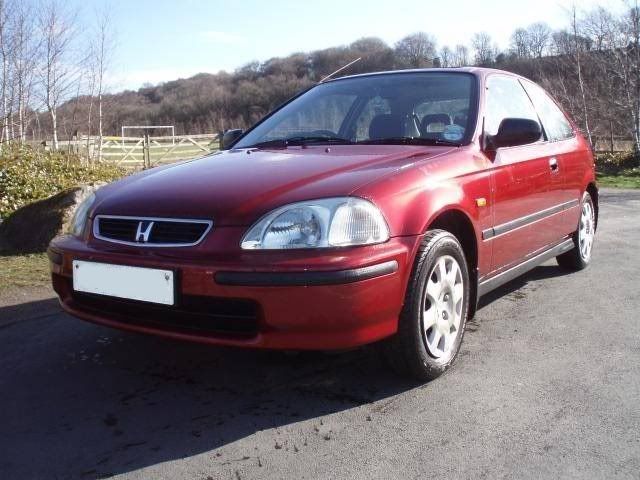
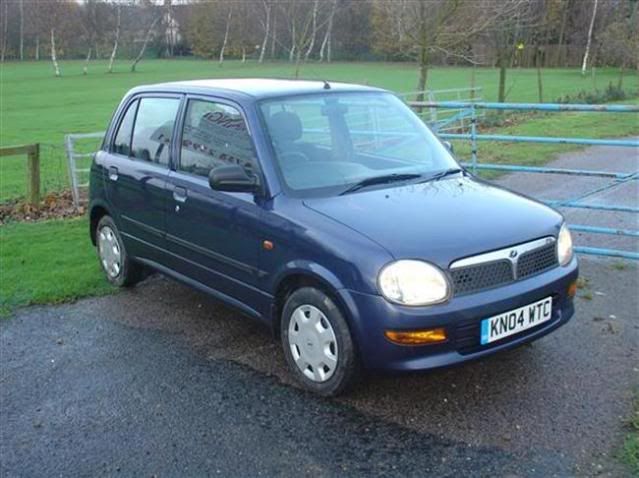
Would you trade Civic for Kenari? Are you reading this from a padded cell? (Perodua image: Parker's)
And remember, that's if you wanted the very cheapest new car on sale. Unless you've been saving like a magpie for the last five years and are vaguely financially secure (and yet somehow still manage to have a 10+ year old car instead of a newish one anyway), then I really can't see how the cashback offer is going to benefit many people. The gulf is even greater if you want to trade that ten year old BMW compact for a shiny new 1-series (even with the additional £1260 BMW are offering on a 116i Sport), or even a rusty old Clio for a brand new airconditioned one that's safer than houses. Manufacturer participation is optional, and some have declined to take part reasoning that it will offer neither themselves nor their potential customers any benefit.
I only hope the sceme will be useful to those who really can benefit from it before the whole thing is declared a massive failure and pulled. Hopefully in the meantime it won't take too many of the good decade-old cars off the road like the Civic above, because for some of us, those are the cars we can actually afford.
If you do want to read more about the scrappage scheme, there's a useful FAQ here: http://www.ukscrappage.co.uk/
Subscribe to:
Posts (Atom)


